
Oli Jay
CEO · Software + commercial
Software engineer / IoT. Built and launched software products. Techstars and commercial-founder experience.
 Bronze Age
Pre-seed investor deck · 2026
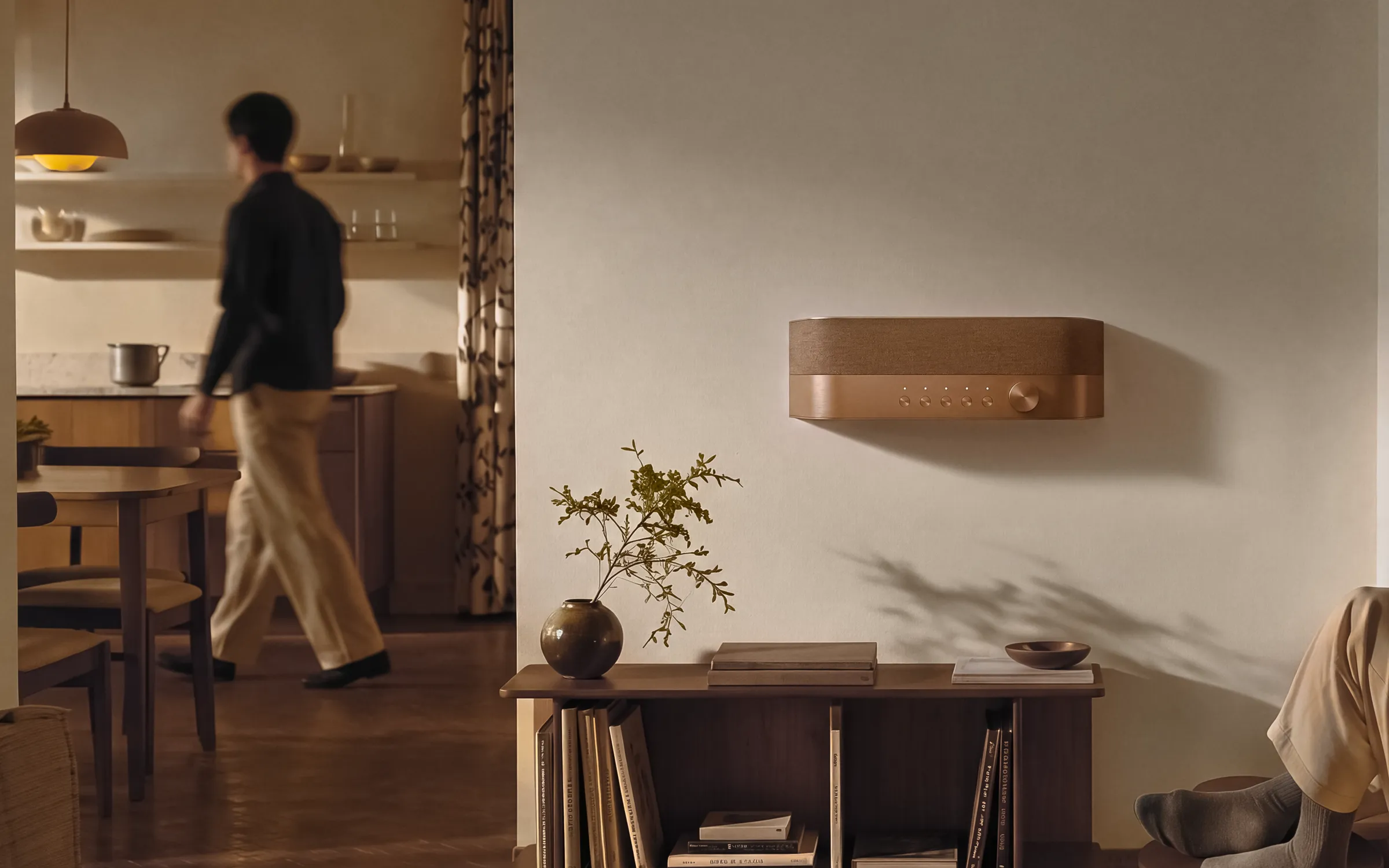
Bronze Age is building a computer that earns a permanent place in the home. The first product is The Radio*.
Design render
Bronze Age02The problem
Today there are two ways to bring serious intelligence into the home: use a cloud assistant controlled by somebody else, or assemble the stack yourself.
Convenient, but not yours
Bronze Age
The missing middle
Yours, but not a consumer product
Convenience without ownership — or ownership without a consumer product.
Bronze Age is building the missing middle. Competition in A1.
Bronze Age03Why now
5.3×
improvement in intelligence per watt for local AI, 2023–2025
Stanford University + Together AI
More capable
Models that recently required large cloud systems increasingly fit consumer hardware.
More responsive
For workloads that run locally, avoiding a cloud round-trip can reduce latency.
More economic
Everyday intelligence need not incur cloud inference cost on every interaction.
Sensitive context can remain at home. Frontier cloud models remain available when useful. Detail in A5.
Local where local is better. Cloud where cloud is better.
Bronze Age04The product
A beautiful, always-available computer designed to live in the home.

Sound
Intelligence
Ownership
Longevity
Useful before it is impressive. Design render · Designed and assembled in England.
Bronze Age05The experience
The Radio* creates a continuous audio stream around your life—combining what you want to hear with what you need to know.
It learns the rhythm
Music, calendar, interests, preferred sources, markets and routines—and can interject when something matters.
You stay in control
Interrupt it, ask a question or choose a mode. Harder questions can use frontier cloud models.
A product you live with, not an app you launch.
Bronze Age06Why physical + why local
Presence
Permanently powered, networked and available. No app to open.
Interface
Speakers, microphones and physical controls make the experience ambient and screenless.
Speed
Local workloads can avoid network round-trips and therefore respond with lower latency.
Ownership + privacy
Context can remain on customer-owned storage; the owner decides when cloud intelligence is used.
Economics
Local compute can reduce the marginal cost of continuous intelligence.
A dedicated AI box has to justify being an AI box every day.
A great audio product already has independent value and deserves a permanent place in the home.
The hardware isn’t packaging for the AI. It is the presence, interface, privacy boundary and economic model. Audio gets the computer into the home.
Bronze Age07From product to platform
The Radio*
Earns a permanent place
Daily audio utility gets Bronze Age into the home.
The household computer
Establishes infrastructure
Future Bronze Age products
Become interfaces to it
The Radio* carries the cost and complexity of establishing the layer. Future products can increasingly become interfaces to it.
Share a computer, not an account.
A household can share infrastructure while keeping individual identity, permissions and private context separate.
The Radio* is the wedge. The household computer is the platform.
Bronze Age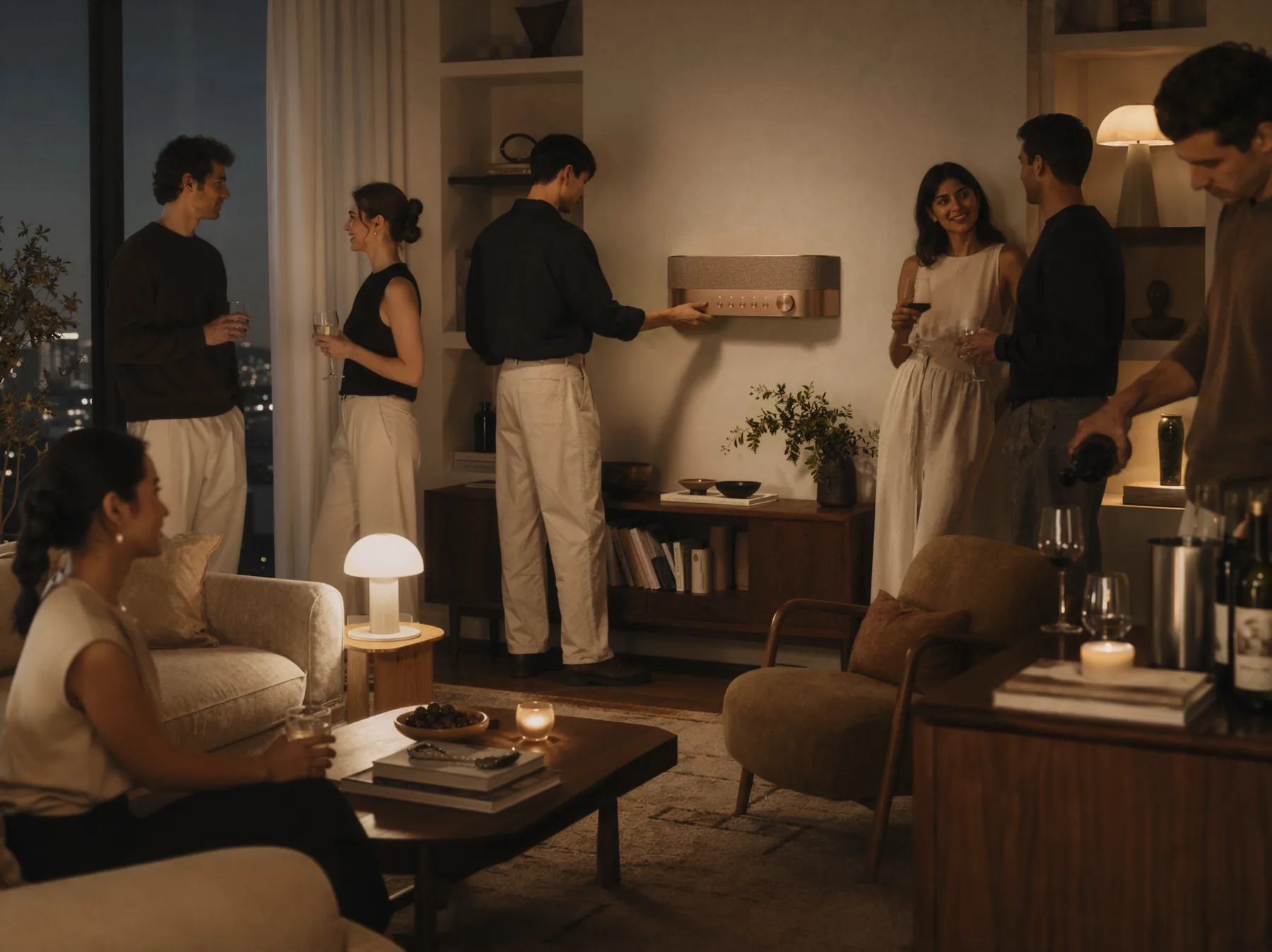
08First customers
Design-conscious, technically curious and able to buy premium technology—but unwilling to build and maintain a home server.
Pricing hypothesis
The Radio* — ~US$2,100 before tax
Willingness to pay is being tested through reservations and paid orders.
Design earns attention. Daily usefulness earns permanence. Detail in A1.
Bronze Age09Go to market
One configuration. One cohort. One clear experiment.
01
Target
20 paid orders for The Radio*
~US$2,100 before tax
02
Target
10–20 pilot homes
03
Target
100 paying UK homes
What the cohort must answer
A focused UK founding-customer cohort, not a scale launch. The first 100 homes exist to show what customers actually use and whether daily behaviour repeats.
Bronze Age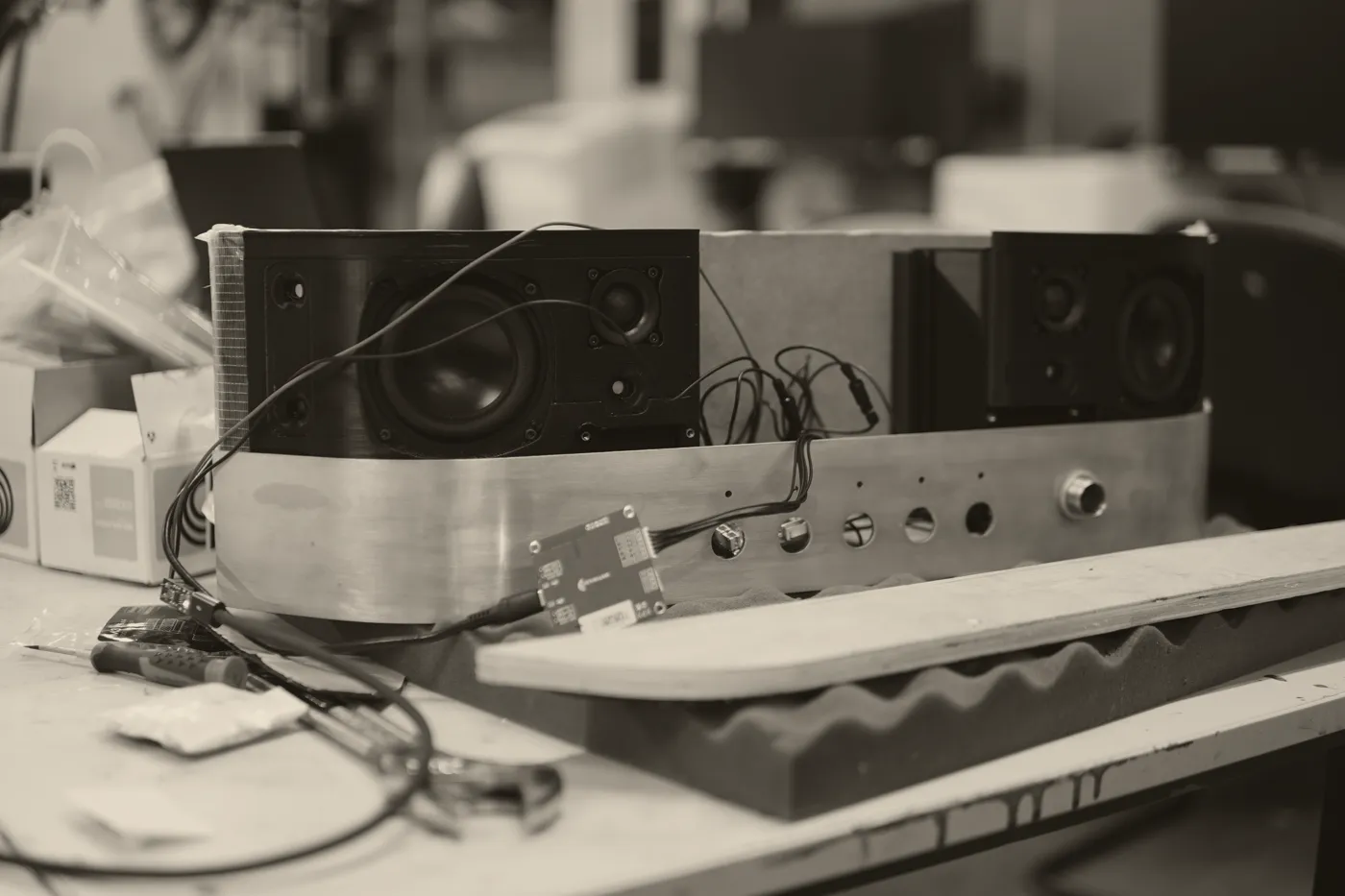

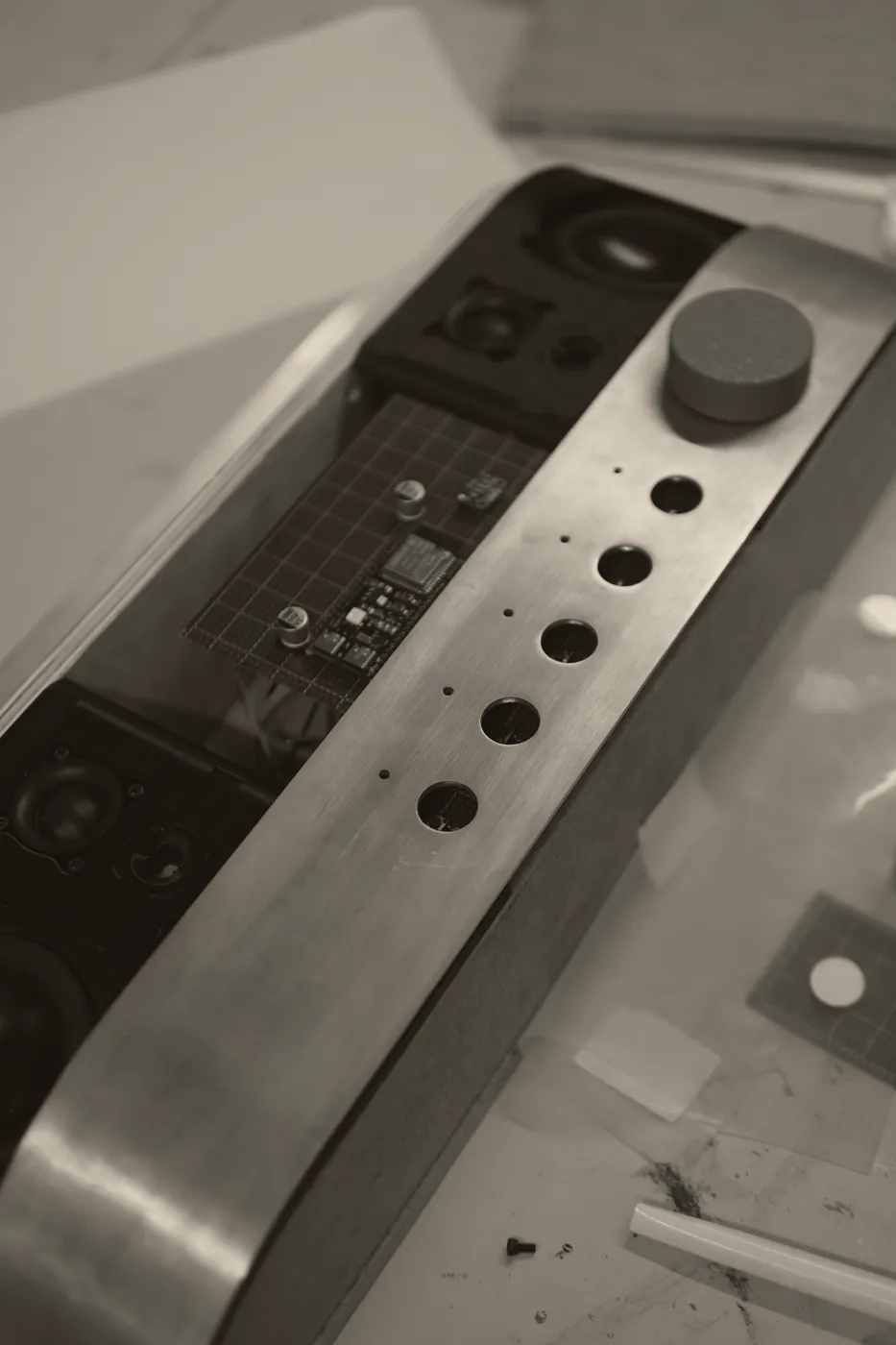
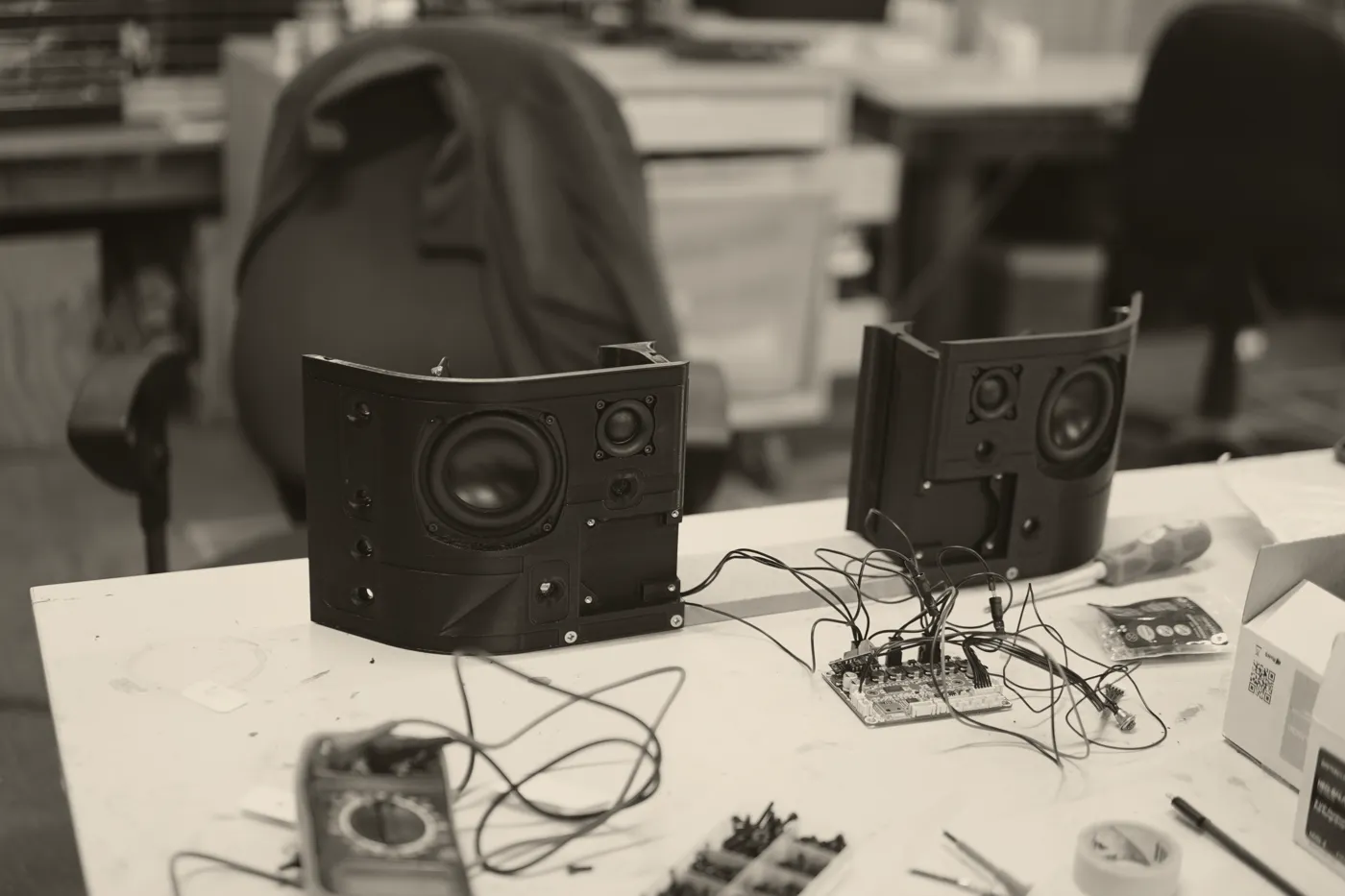
10Progress
Hardware
Software
Audio + production support
Next
Technical feasibility is increasingly proven. Commercial validation and production engineering are the next risks.
Bronze Age11Team
The founders have spent 5+ years building products together.
CEO · Software + commercial
Software engineer / IoT. Built and launched software products. Techstars and commercial-founder experience.

Industrial design + brand
Industrial design, CAD, materials and premium product presentation.

Electronics + systems
Electrical + software engineer. Smart-home experience. Designed Bronze Age’s electronics and PCB architecture.
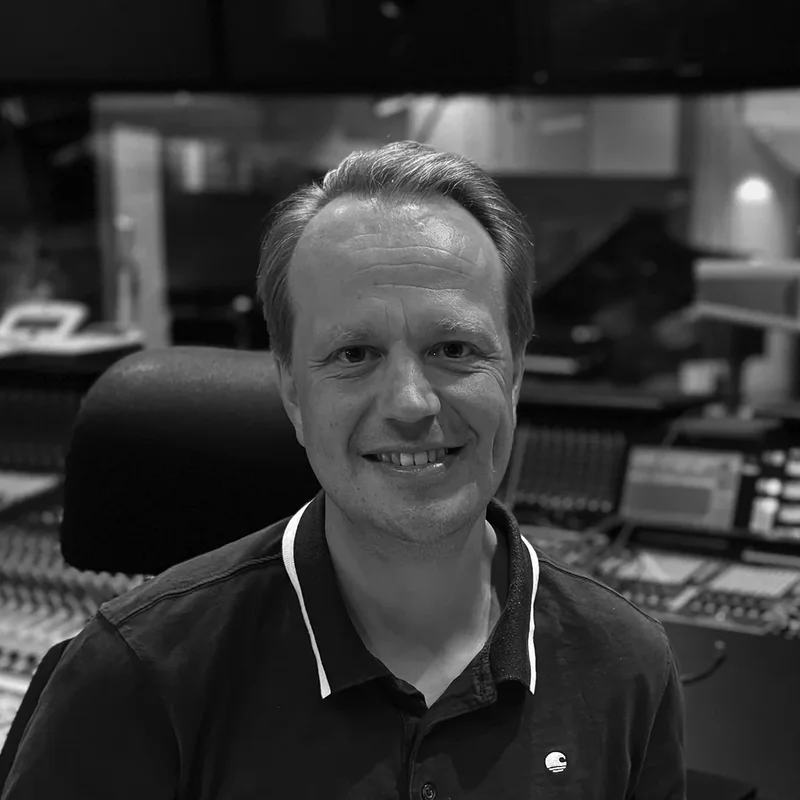
Daniel Fletcher
Founder/CEO of Airsound; inventor and electroacoustic engineer. ~30 years across professional and consumer audio. Former Head of Innovation & Development across Roberts Radio and Morphy Richards.
Production experience
10+ years direct China electronics manufacturing by 2019; DFM, manufacturer selection, supplier engagement and QA. Airsound technology shipped in 150,000+ products.
Advising Bronze Age on acoustics, product engineering, DFM, suppliers, sourcing, QA and production ramp.
Bronze Age12Business model
1
The Radio*
The first units deliberately price expensive compute close to cost.
2
Keep the object. Upgrade the computer.
3
Potential lifetime value—not yet proven.
Provisional engineering estimates · The Radio* (~US$2,100)
19% → ~30% → ~45%
Early production → 1,000 units → 10,000 units
The first 100 units optimise for learning, adoption and proving the full product—not mature margin. Volume engineering improves hardware economics. The architecture also gives Bronze Age the option to introduce other configurations later, once the flagship experience and demand are proven. Detail in A2.
Build the relationship through hardware. Increase usefulness over the lifetime of the product.
Bronze Age13What this round proves
DFM, supplier and QA process supported by experienced consumer-audio manufacturing expertise.
All 100 homes run the full local-compute product—testing whether local compute materially improves the experience. At the end of this round we should know whether Bronze Age deserves to scale. Detail in A4.
Bronze Age14The plan
Months 0–3
Months 3–6
Months 6–12
Months 12–18
Daniel Fletcher supports acoustics, DFM, supplier selection and manufacturing planning through production intent and ramp.
Every phase retires a specific risk. Full roadmap in A4.
Bronze Age15The ask
US$1M
Pre-seed
US$5M
Post-money
18
Months
US$25K committed · seeking a lead.
Round goals
Indicative allocation
Product + engineering
Electronics, software, AI, acoustics, thermals, production engineering
Production + first units
Prototypes, suppliers, manufacturing, QC and inventory
Demand + customer acquisition
Reservations, paid orders, demonstrations, launch, reviewers and CAC experiments
Compliance + operations
Certification, security, privacy, legal, insurance, overhead and contingency
This round earns the right to scale.
Bronze Age · Manchester · [email protected]
Bronze AgePages A1 to A5
Detail and sources behind the deck.
Bronze AgeA1Customer + landscape
Initial customer
Design-conscious, technically curious and affluent enough for premium consumer technology—but unwilling to build and maintain a home server themselves.
Pricing hypothesis: The Radio*, ~US$2,100 before tax. The first 100 homes all use the full local-compute configuration. Willingness to pay remains unproven.
Launch geography, not TAM
The UK’s 28.6 million households provide launch context only. The near-term market is the much smaller reachable group that understands the product and can afford it. We are not presenting total UK households as an addressable market.
Existing landscape
Qualitative expansion path
Premium early adopters → broader household computing → additional Bronze Age interfaces and products → selected international markets.
The first 100 homes must show repeat use, willingness to pay, reliability, support burden and a credible acquisition path before broader expansion.
UK household count is launch-geography context only, not TAM. Source: ONS, 2024 (A5).
Bronze AgeA2Bill of materials (draft)
| Per unit, USD | 100 units | 1,000 units | 10,000 units |
|---|---|---|---|
| Custom PCB with DSP, microphones and amplifier | 92 | 88 | 85 |
| Power supply | 50 | 40 | 30 |
| Acoustics: drivers, enclosure, fabric | 180 | 130 | 95 |
| Body (3D printed up to 1,000 units; injection moulded at 10,000) | 150 | 150 | 20 |
| Brushed aluminium panel, knob and buttons (bronze finish) | 57 | 43 | 39 |
| Boot storage (256 GB NVMe) | 30 | 25 | 20 |
| Spatial audio licence (placeholder; terms under discussion) | 67 | 56 | 48 |
| Assembly and test (England) | 120 | 80 | 60 |
| Packaging and logistics | 70 | 55 | 45 |
| Landed cost without compute module (potential future configuration) | 816 | 667 | 442 |
| + Compute module (Jetson Orin NX 16GB) | 880 | 800 | 720 |
| Landed cost with compute module (The Radio* · first-100 product) | 1,696 | 1,467 | 1,162 |
| Gross margin, The Radio* at US$2,100 | 19% | 30% | 45% |
| Gross margin, potential future configuration at an illustrative US$1,200 | 32% | 44% | 63% |
Potential future configuration — not part of the first 100-home cohort. The architecture could support a lower-cost unit without the compute module; Bronze Age may explore this later if customer research supports it. Not a committed SKU; no launch date.
All figures in US dollars; dashed figures are draft estimates. Metal parts: supplier quotation, ex VAT, at ~US$1.32/£. PCB: board quotation plus US$60 components. Body at 10,000 units: US$100,000 tooling spread over the run plus US$10 per unit. Compute at 100 units: ~US$900, added at cost. Storage upgrades at cost, not modelled.
Bronze AgeA3Illustrative path to breakeven
If draft unit economics and assumed acquisition cost hold, cumulative contribution could cross costs to recover at roughly 4,900 units. Real breakeven depends on measured COGS and CAC.
Per unit, by phase
| 1–100 | 101–9,999 | 10,000+ | |
|---|---|---|---|
| Gross profit | $404 | $633 | $938 |
| Acquisition cost | −$600 | −$400 | −$250 |
| Contribution | −$196 | $233 | $688 |
Contribution is draft gross profit less assumed CAC. Beyond 10,000 units, the model holds costs flat.
Logarithmic scales. Not a prediction—breakeven moves with real COGS, CAC, mix and how much of the round is counted as recoverable. Storage excluded.
Bronze AgeA4Roadmap
Months 0 to 3
Months 3 to 6
Months 6 to 12
Months 12 to 18
Every phase retires a specific risk. Daniel’s experience informs DFM, supplier selection, sourcing, QA and production ramp; it does not imply that manufacturing is solved or that final assembly moves from England.
Bronze AgeA5Sources